Have you ever opened your mouth to yawn, chew, or talk and noticed a clicking or popping sound coming from your jaw? If you have been asking yourself, "Why does my jaw click?", you are not alone. Jaw clicking is one of the most common symptoms associated with temporomandibular joint (TMJ) disorders. While occasional clicking without pain may not always be serious, persistent clicking can indicate that the jaw joint is not moving as efficiently as it should.
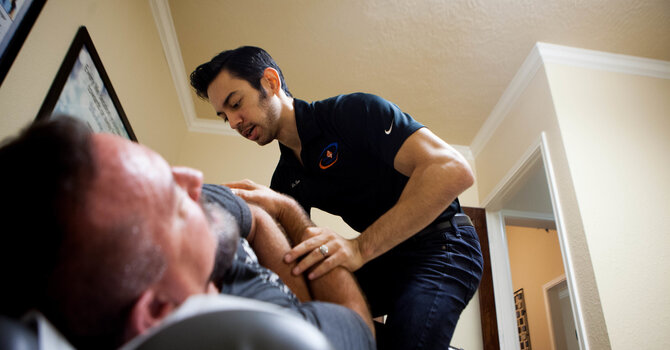
At Chiro 4 All Health Center in Richmond, TX, we help patients understand why their jaw clicks by evaluating the entire system involved—including the TMJ, muscles, cervical spine, posture, and movement patterns.
What Is the TMJ?
The temporomandibular joint (TMJ) connects your lower jaw to your skull just in front of your ears.
It allows your jaw to:
- Open and close
- Move side-to-side
- Move forward and backward
- Chew food
- Speak
- Yawn
Unlike many joints in the body, the TMJ contains a small cartilage disc that helps the joint move smoothly.
This disc acts like a cushion between:
- The mandibular condyle (jaw bone)
- The temporal bone of the skull
When this disc does not move properly, patients may experience:
- Clicking
- Popping
- Catching
- Locking
- Jaw discomfort
The Most Common Reason Your Jaw Clicks: Disc Displacement With Reduction
One of the most common causes of jaw clicking is a condition called:
Disc displacement with reduction
This occurs when the small disc inside the TMJ moves slightly out of its normal position.
During jaw opening:
- The jaw begins moving without the disc properly positioned.
- As the mouth opens farther, the jaw "recaptures" the disc.
- This creates the familiar clicking or popping sound.
When closing:
- The disc may move forward again.
- Another click may occur.
This does not automatically mean your jaw is damaged.
Many people have disc displacement with reduction without significant pain.
However, repeated abnormal mechanics may contribute to:
- Joint irritation
- Muscle tension
- Difficulty opening the mouth
- Jaw fatigue
Is Jaw Clicking Normal?
The answer is:
Sometimes.
A painless click that occurs occasionally may not require treatment.
However, jaw clicking becomes more concerning when combined with other symptoms.
You should consider an evaluation if you experience:
- Jaw pain
- Locking
- Difficulty opening your mouth
- Headaches
- Ear discomfort
- Facial pain
- Neck tension
- Pain while chewing
The clicking sound itself is only part of the story.
The more important question is:
Why is the joint moving this way?
Why Does My Jaw Click When I Chew?
Chewing requires coordinated movement between:
- Jaw muscles
- TMJ discs
- Neck muscles
- Nervous system control
If one part of that system is not functioning correctly, the jaw may compensate.
Possible contributors include:
- Clenching
- Grinding
- Muscle tension
- Previous injury
- Joint inflammation
- Poor movement coordination
Does Jaw Clicking Go Away on Its Own?
Sometimes.
Mild clicking without pain may remain stable for years.
However, clicking combined with:
- Pain
- Locking
- Limited movement
- Increasing symptoms
may benefit from professional evaluation.
Early assessment can help identify contributing factors before symptoms become more difficult to manage.
Frequently Asked Questions
Is jaw clicking always TMJ disorder?
Not necessarily. Some people have clicking without pain or dysfunction. However, clicking with pain, locking, or limited movement may indicate a TMJ disorder.
Why does my jaw pop when I open my mouth?
A common reason is the TMJ disc moving out of position and then returning during opening.
Should I worry if my jaw clicks?
If it is painless and occasional, it may not be concerning. If it is painful or worsening, an evaluation is recommended.
A clicking jaw is your body's way of telling you that something about the movement of your TMJ has changed.
While not every click is dangerous, persistent clicking should not be ignored—especially when combined with pain, headaches, locking, or difficulty chewing.
At Chiro 4 All Health Center in Richmond, TX, we evaluate TMJ problems by looking beyond the sound itself and examining the muscles, joints, posture, and movement patterns contributing to your symptoms.
If your jaw clicks, pops, or feels uncomfortable, contact our office today to schedule a comprehensive TMJ evaluation.

Tyler Flores
Contact Me.jpg)